LPMA / FNC, Santa Cruz

Madeira Airport, from the aeronautical publication

What the official aviation documents actually say about the runway on stilts, the wind limits, and the training a captain needs to land here.

Checked against the AIP and official sources on July 26, 2026.

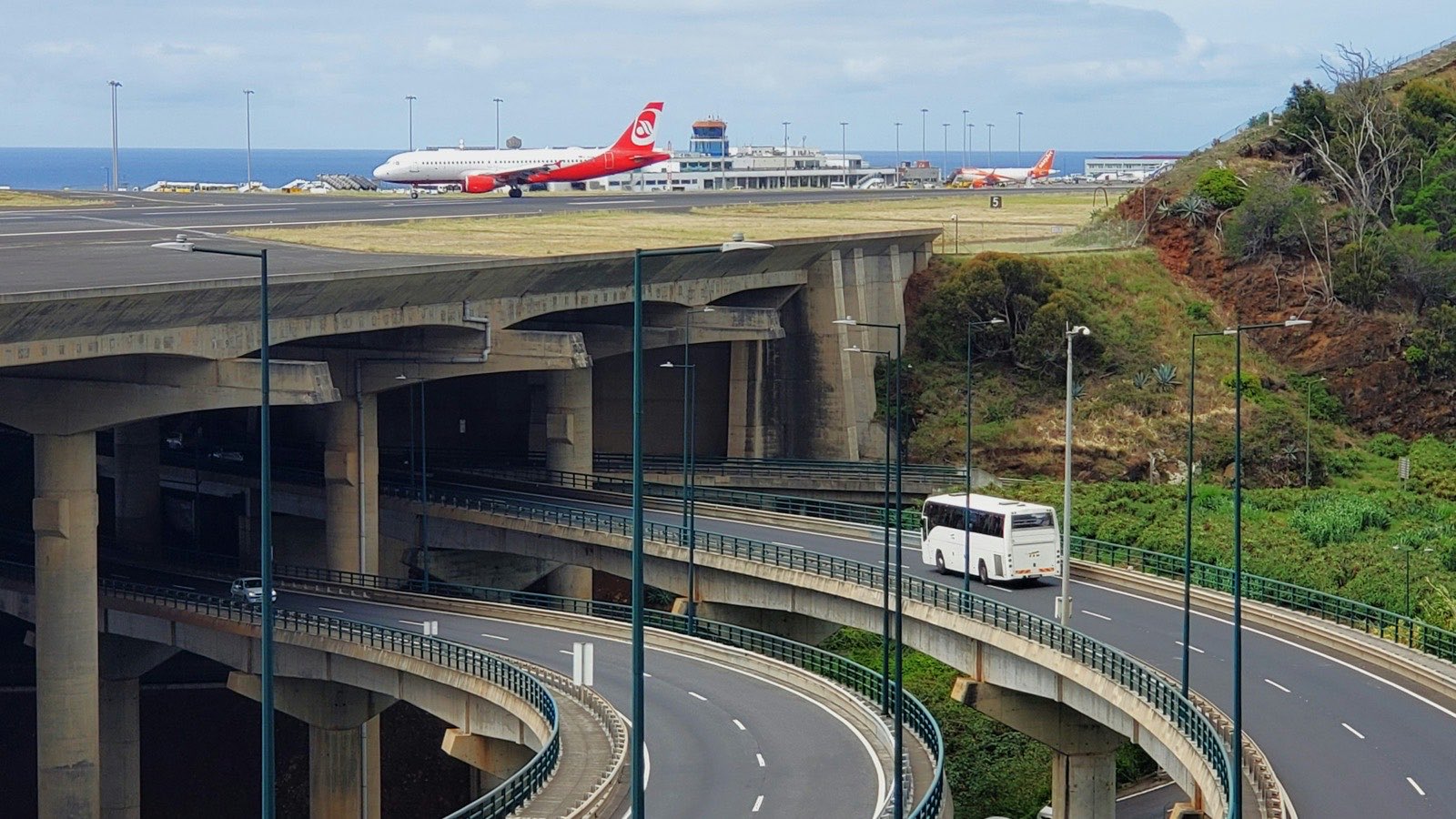
Madeira Airport from above the road interchange, two airliners on the apron beside the control tower, the runway carried on concrete pillars in the foreground and the Atlantic behind.
MyLife Art

The bit everyone photographs

A runway standing on 180 columns above the sea

The extension is a deck carried on 180 concrete columns, roughly 1020 m long and 180 m wide, standing about 57 m above the bay. It was inaugurated in September 2000, and it is why the eastern half of the runway appears to float.

The structure won the IABSE Outstanding Structure Award in 2004. Its designer was António Segadães Tavares.

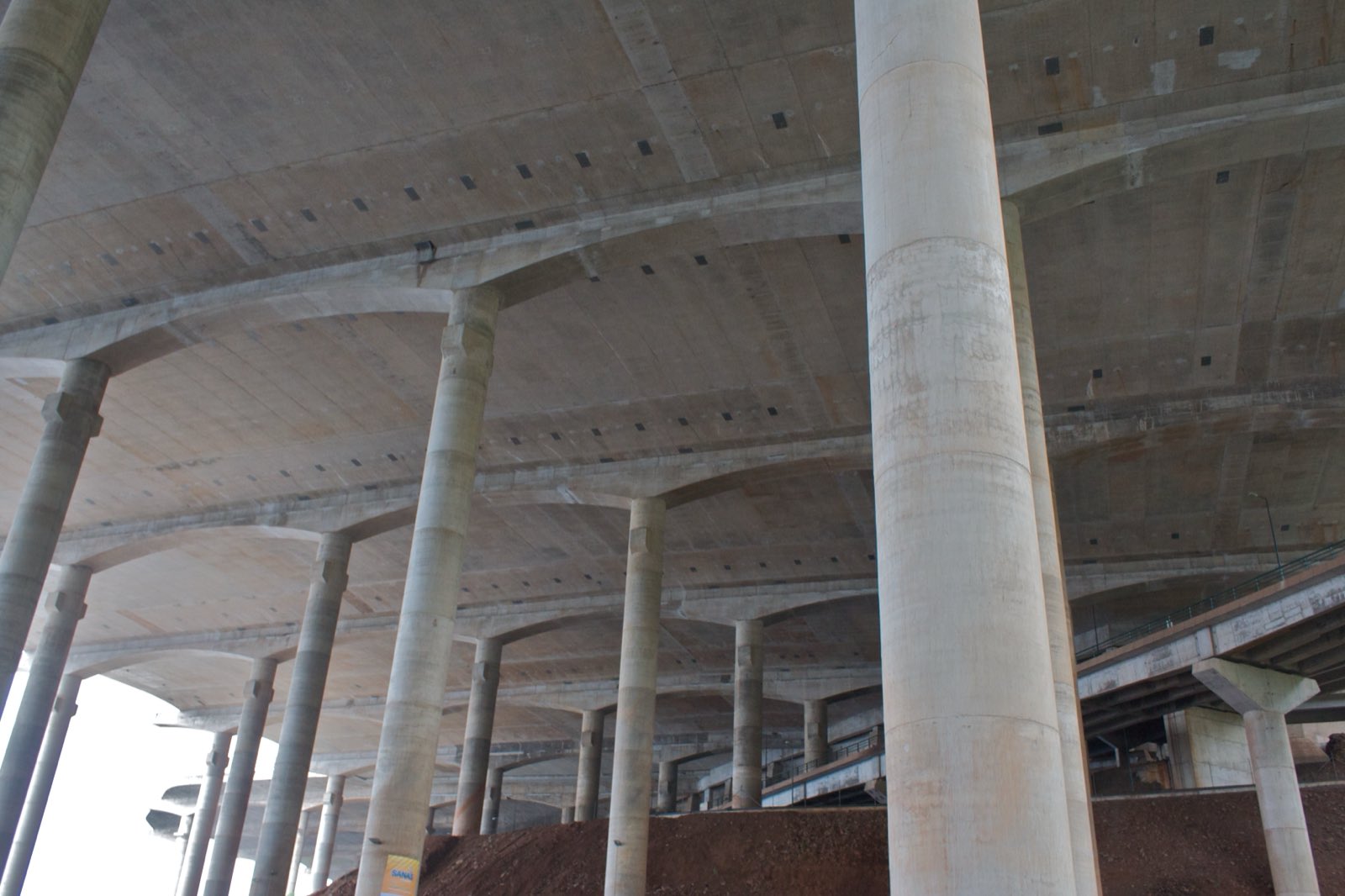
Looking up from ground level into the forest of concrete columns holding Madeira Airport’s runway deck in the air, the underside of the deck filling the top of the frame.
Looking up into the columns from underneath. The road and the sea both continue below the runway.Alexander Baxevanis · CC BY 2.0

The number almost every guide gets wrong

It is not a 2,781-metre runway

Two figures circulate, and both are true about different things. 2781 m is the total pavement as built. 2481 m is the Landing Distance Available that the AIP declares — the figure that actually governs an aeroplane. Quoting the larger one as “the runway length” describes nothing a pilot uses.

Declared distances: take-off run 2631 m, landing distance 2481 m, width 45 m, grooved asphalt and concrete.

Why it is genuinely difficult

The terrain, in the AIP’s own words

This is not reputation. It is the operational description in the official publication:

The Airport is located on a plateau on the east coast of Madeira Island. Except for the seaside, ground raises rapidly very closed to it. This fact generates, very often, wind variation and turbulence. Also severe low altitude wind shear conditions and / or micro burst are likely to be encountered.

Quoted exactly as published, including its non-idiomatic English.

The AIP also states plainly: “Straight-in approaches not authorized from Funchal VOR to Runway 23.” The circling approach you see in the videos is not a flourish — it is the published procedure.

The audio is live air traffic control and the ATIS broadcast, so you hear the actual wind report the crew is working from — the same reading this page turns into a risk estimate.

Filmed and published by Approach and Departure Videos.

The crosswind case, which is the one that decides diversions. Real flight-deck footage — flight-simulator videos of this approach circulate widely and look almost identical.

Filmed and published by DutchPilotGirl.

Nothing loads from YouTube until you press play — not even the preview image, which is drawn here on the page.

The rule that decides your day

Madeira publishes its landing wind limits

Almost no airport in the world puts numerical landing wind limits in its AIP. Madeira does, by wind direction, and these are the same figures the live outlook on our home page computes with.

Wind directionRunwayMeanGust
300°–010° MAGEither15 kt25 kt
020°–040° MAGEither20 kt30 kt
120°–190° MAG0520 kt30 kt
120°–190° MAG2315 kt25 kt
200°–230° MAGEitherCombined 25 kt
See today’s landing outlook

The claim that turns out to be true

Captains really do need specific authorisation

For revenue flights with aircraft carrying more than 10 passengers, the operator must run a training programme approved by ANAC, the Portuguese civil aviation authority, for each aircraft type. It covers day and night landings and take-offs in both directions, with emphasis on balked landings.

A level D simulator satisfies it with no line training at all. With a level C simulator, the captain must additionally perform one real landing and take-off at Madeira with an instructor aboard.

A commander’s authorisation lasts 6 months.

It is not a separate licence, which is how it is usually described. It is an operator training programme plus a time-limited authorisation — a distinction worth keeping, because it is the reason a crew change can matter.

If the wind is out of limits

What actually happens

Air traffic control will not issue a landing clearance and will instruct a go-around when the limits are exceeded as the aircraft reaches the published missed-approach point.

A commander may still land on their own responsibility — which, the AIP adds, “does not relieve him/her from compliance with published wind operating limitations”. That sentence explains something travellers find baffling: why two aircraft minutes apart can make opposite decisions.

What to do if your flight diverts
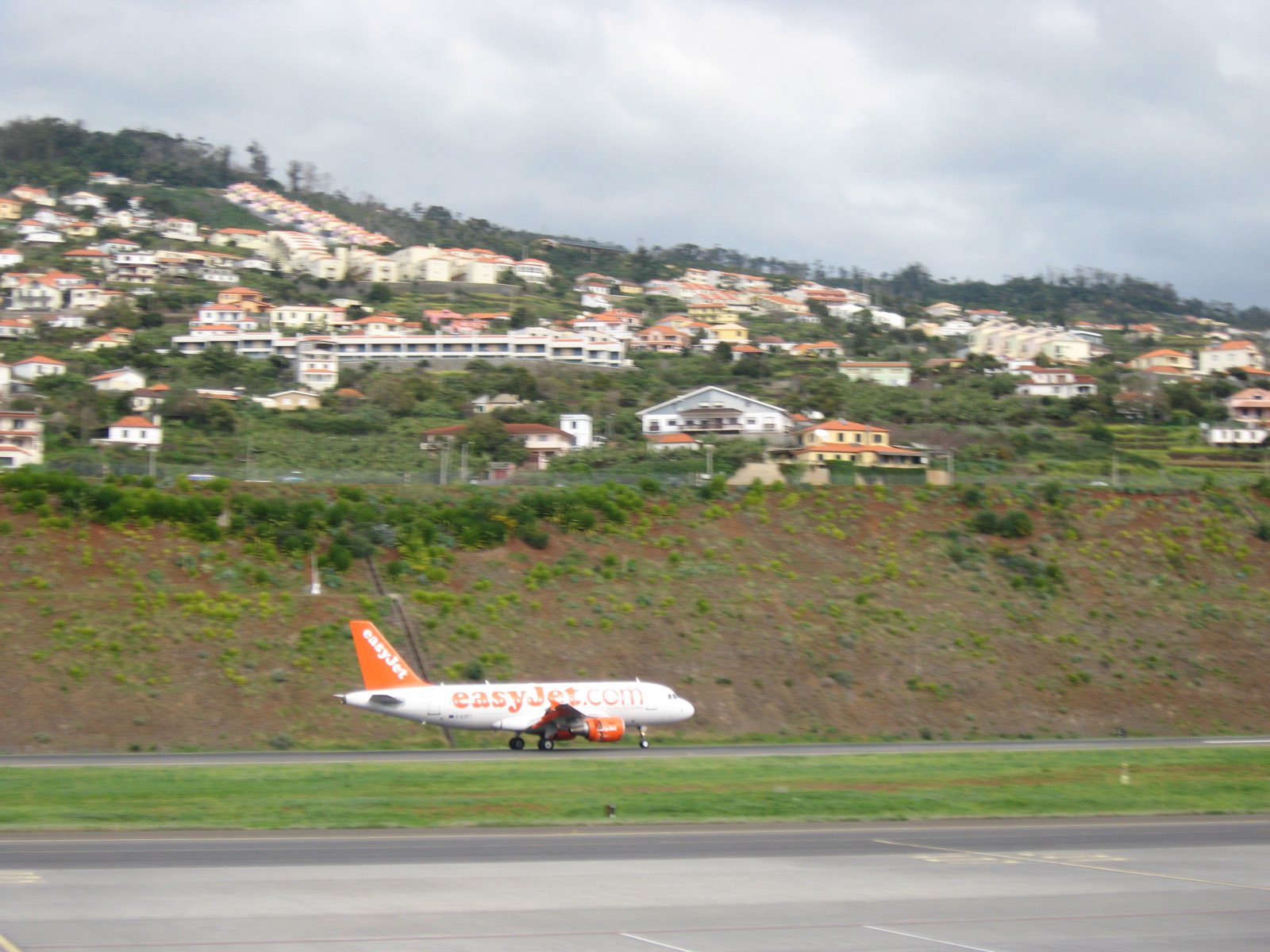
An Airbus A319 touching down at Madeira Airport, with the terraced hillside and pastel houses of Santa Cruz rising steeply behind the runway embankment.
Will Hedington · CC BY 2.0

Being straight with you

Three things we could not confirm

All three are widely published elsewhere. None of them could be traced to a source we would stand behind, so they are named rather than repeated.

  • How tall the columns are

    Sources contradict each other flatly — “about 70 m each” against “120 m total, 60 above and 60 below sea level”. The designer’s own site could not be reached. We publish the column count and the deck height, and no column height.

  • Whether the extension opened in 2000 or 2002

    The 15 September 2000 inauguration is the better-attested date and is what we give, but several sources date completion to October 2002. Neither could be settled against a government or operator primary source.

  • Bus route numbers and fares to Funchal

    The AIP says only “buses and taxis”. The route numbers and the Aerobus fare that circulate online come from travel sites, not from the operator. Check at the airport rather than trusting a number from us.

Sources

Where all of this comes from

LPMA · FNC · 58 m (191 ft) · 13.2 km

Getting from the airport

Airport transfers and private pick-ups

The airport is 13 km from Funchal and the AIP lists only “buses and taxis”. If you would rather not work out a bus at the end of a flight, a transfer is booked in advance.

See airport transfers (opens in a new tab)

We earn a commission if you book through this link. It costs you nothing extra, and it never changes what this page says.