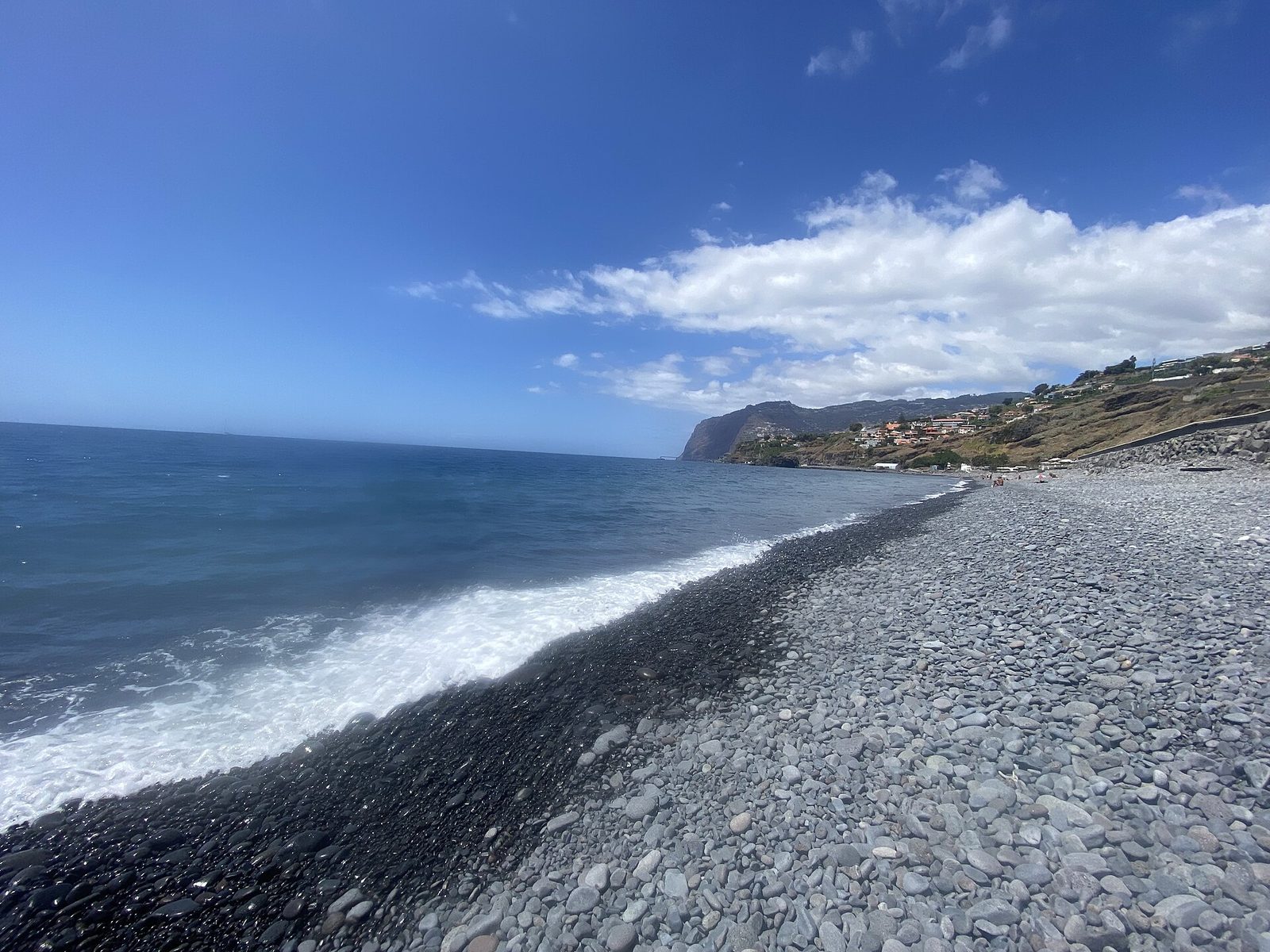
Why there is no sand
Madeira is a young volcanic island with cliffs that fall straight into deep water. There has been neither the time nor the quartz to make a sandy shore: the rock erodes into rounded basalt cobbles instead, and the sea keeps rolling them rather than grinding them down. That is the whole explanation, and it applies to the entire island.
Lifeguard service: what the documents list
23
51
Portugal names every designated bathing water in a regulation published each spring. For 2026 that is Portaria n.º 204-A/2026/1, and Annex IV lists 51 of them on Madeira island. Only 23 appear in the column marked “praia de banhos”.
The annex explains what the empty cells mean: those are the waters where, at the date of publication, assistance to bathers is not assured. This does not establish whether a lifeguard will be present during a particular visit. Several of them have car parks, bars and brown tourist signs.
What each one actually is
Surface, season and cost, side by side. Seasons are the 2026 dates from the portaria, exactly as published. Even where the documentation lists lifeguard service, this does not confirm a lifeguard is present when you visit. Always check on arrival.
| Beach | Municipality | Surface | Bathing season 2026 | Lifeguard | Entry |
|---|---|---|---|---|---|
| Porto Moniz natural poolsBlue Flag 2026 | Porto Moniz | Lava rock pools | April 15 to October 15 | Lifeguard: Service listedEven where the documentation lists lifeguard service, this does not confirm a lifeguard is present when you visit. Always check on arrival. Swimming and outdoor safety | €3 |
| Cachalote pools, Porto Moniz | Porto Moniz | Lava rock pools | Not a designated bathing water | Lifeguard: Service not confirmedEven where the documentation lists lifeguard service, this does not confirm a lifeguard is present when you visit. Always check on arrival. Swimming and outdoor safety | Free |
| Clube Naval do Seixal pools | Porto Moniz | Lava rock pools | June 1 to September 30 | Lifeguard: Service not confirmedEven where the documentation lists lifeguard service, this does not confirm a lifeguard is present when you visit. Always check on arrival. Swimming and outdoor safety | Free |
| Porto do Seixal beach | Porto Moniz | Natural dark sand | June 1 to September 30 | Lifeguard: Service listedEven where the documentation lists lifeguard service, this does not confirm a lifeguard is present when you visit. Always check on arrival. Swimming and outdoor safety | Free |
| Praia da Laje, Seixal | Porto Moniz | Pebble (calhau) | June 1 to September 30 | Lifeguard: Service not confirmedEven where the documentation lists lifeguard service, this does not confirm a lifeguard is present when you visit. Always check on arrival. Swimming and outdoor safety | Free |
| Calheta beachBlue Flag 2026 | Calheta | Imported sand | June 29 to September 30 | Lifeguard: Service listedEven where the documentation lists lifeguard service, this does not confirm a lifeguard is present when you visit. Always check on arrival. Swimming and outdoor safety | Free |
| Machico beach (Banda d’Além)Blue Flag 2026 | Machico | Imported sand | June 16 to September 27 | Lifeguard: Service listedEven where the documentation lists lifeguard service, this does not confirm a lifeguard is present when you visit. Always check on arrival. Swimming and outdoor safety | Free |
| Prainha, CaniçalBlue Flag 2026Limited use | Machico | Natural dark sand | June 30 to September 27 | Lifeguard: Service listedEven where the documentation lists lifeguard service, this does not confirm a lifeguard is present when you visit. Always check on arrival. Swimming and outdoor safety | Free |
| Praia Formosa, FunchalBlue Flag 2026 | Funchal | Pebble (calhau) | June 1 to September 15 | Lifeguard: Service listedEven where the documentation lists lifeguard service, this does not confirm a lifeguard is present when you visit. Always check on arrival. Swimming and outdoor safety | Free |
| Garajau beachLimited useCable car | Santa Cruz | Pebble (calhau) | June 15 to September 15 | Lifeguard: Service listedEven where the documentation lists lifeguard service, this does not confirm a lifeguard is present when you visit. Always check on arrival. Swimming and outdoor safety | Free |
| Ponta do Sol beach | Ponta do Sol | Pebble (calhau) | June 10 to September 14 | Lifeguard: Service listedEven where the documentation lists lifeguard service, this does not confirm a lifeguard is present when you visit. Always check on arrival. Swimming and outdoor safety | Free |
| Vigário beach, Câmara de Lobos | Câmara de Lobos | Pebble (calhau) | May 1 to September 27 | Lifeguard: Service listedEven where the documentation lists lifeguard service, this does not confirm a lifeguard is present when you visit. Always check on arrival. Swimming and outdoor safety | Free |
| Jardim do Mar | Calheta | Pebble (calhau) | Not a designated bathing water | Lifeguard: Service not confirmedEven where the documentation lists lifeguard service, this does not confirm a lifeguard is present when you visit. Always check on arrival. Swimming and outdoor safety | Free |
| Paul do Mar | Calheta | Pebble (calhau) | Not a designated bathing water | Lifeguard: Service not confirmedEven where the documentation lists lifeguard service, this does not confirm a lifeguard is present when you visit. Always check on arrival. Swimming and outdoor safety | Free |
The golden sand arrived by ship
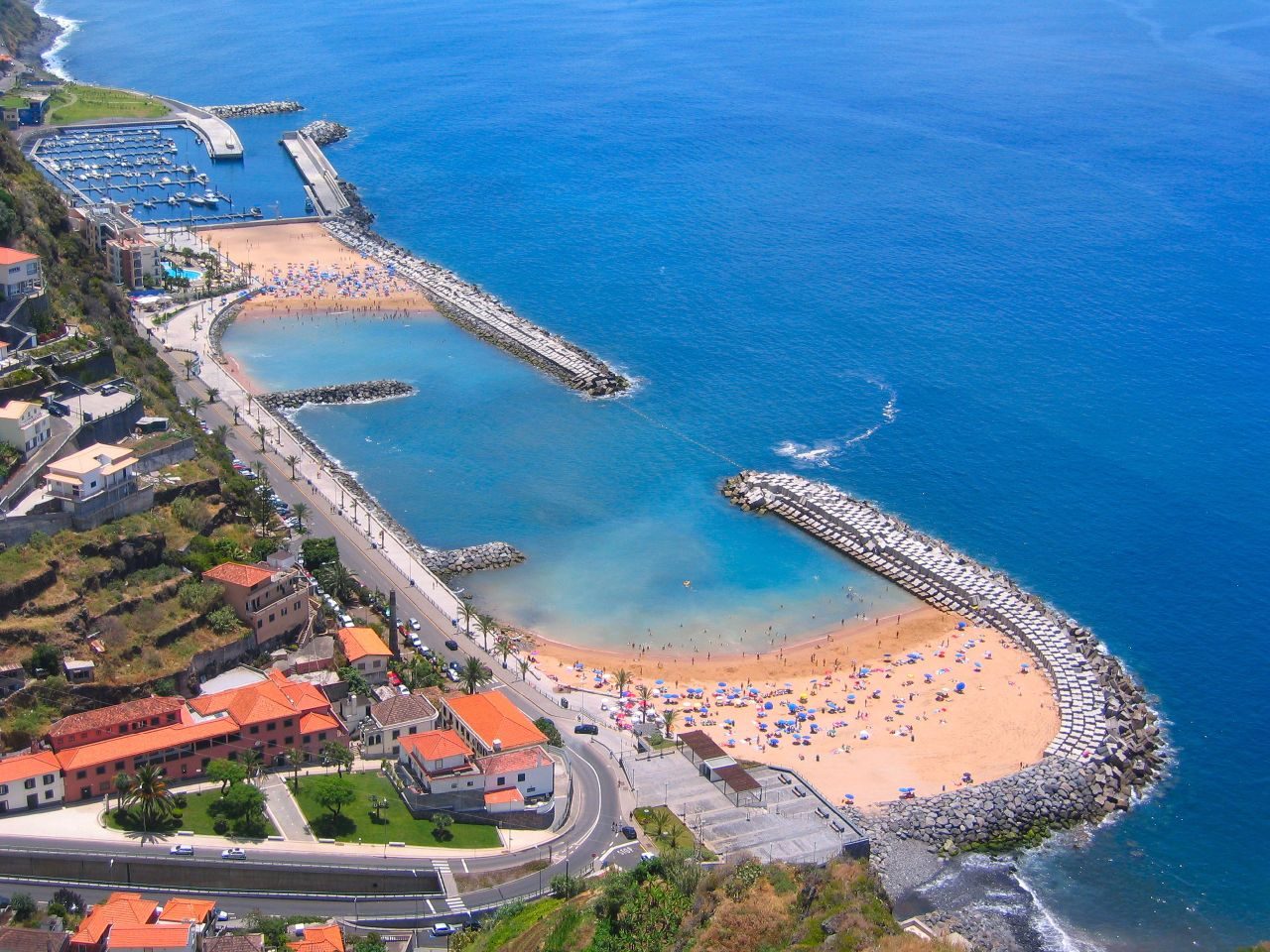
Calheta opened in 2004 and was the first. Machico followed on September 29, 2008: a beach 125 metres long and 70 metres wide, built behind rock breakwaters that hold the sand against a sea that would otherwise take it back. It already had to be topped up once, after the April 2008 storms stripped the Calheta sand off in a week.
Both are described everywhere as sand from Morocco. It was loaded at Laayoune, which is in Western Sahara — a non-self-governing territory under Moroccan control since 1975, and not the same place. A Madeiran official said as much to the Lusa news agency at the time; the distinction simply did not survive into the tourism copy.
Porto Moniz charges. Seixal does not.
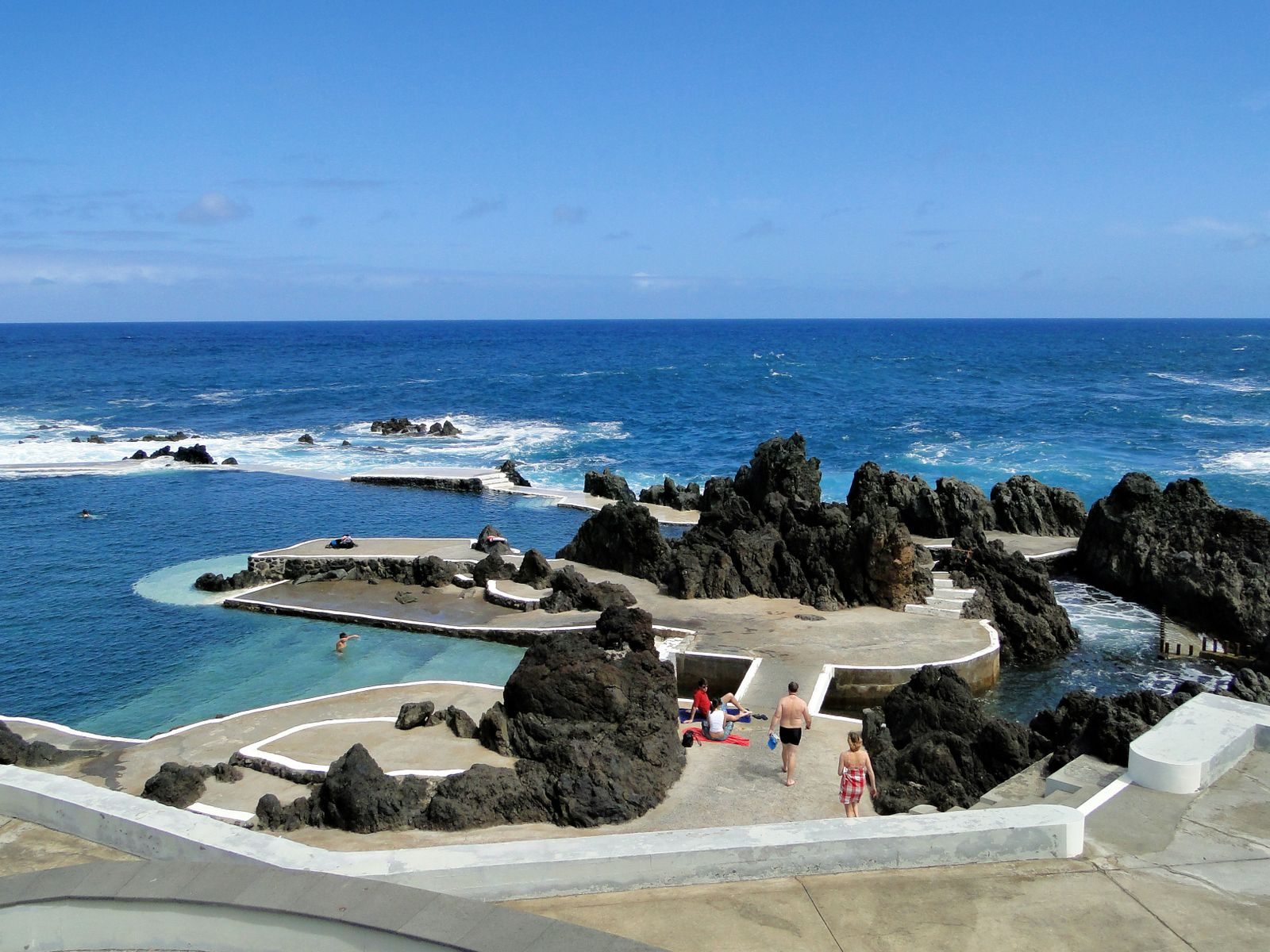
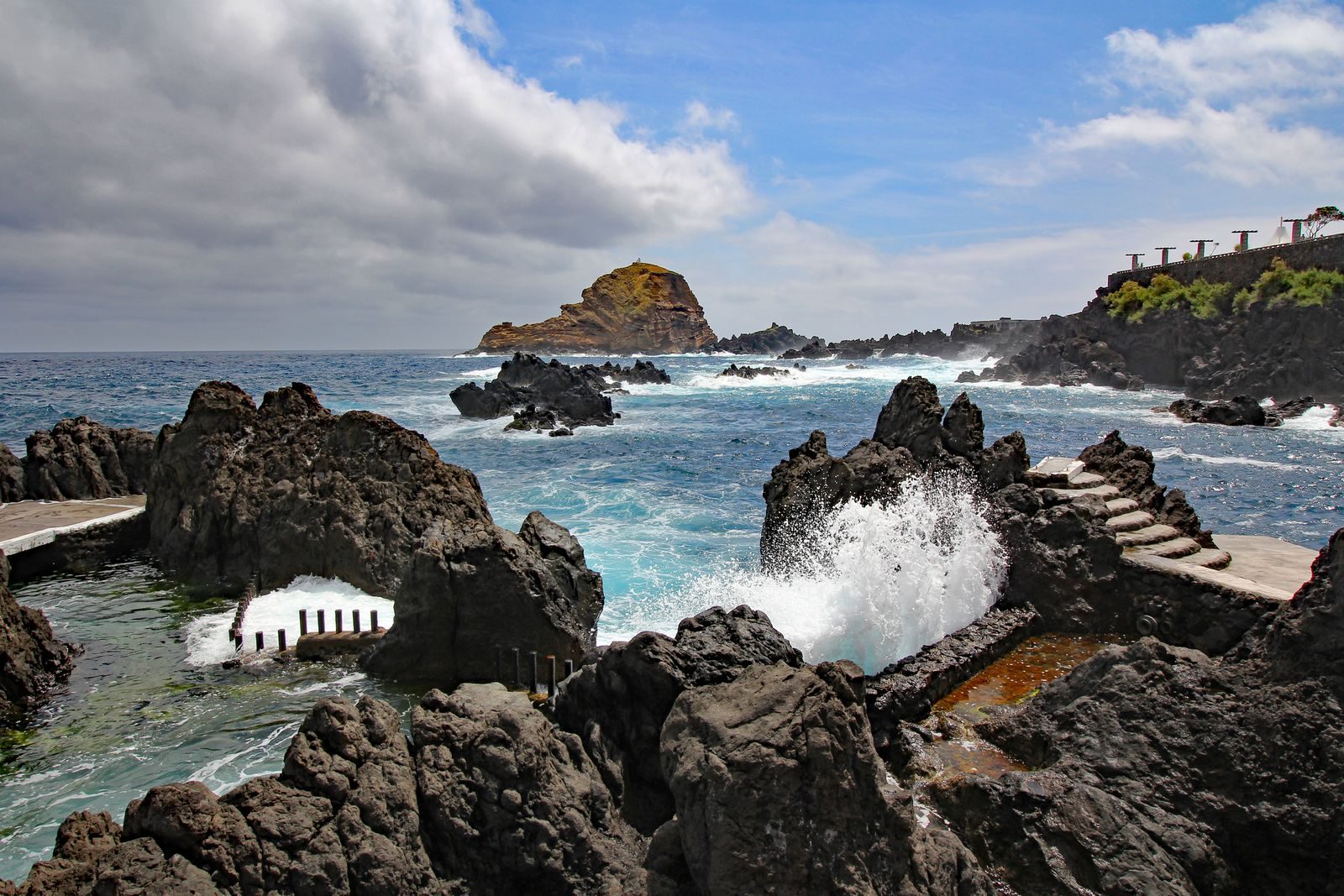
The lava pools at Porto Moniz are the island’s signature swim, and the municipal complex charges €3 a head, all year, with no free season. It opens 09:00–19:00 in summer and 09:00–17:00 in winter, with lifeguard service listed. Always check on arrival that a lifeguard is present.
A few minutes along the same seafront, beside the Cachalote restaurant, is a second set of pools the municipality itself describes as free to enter. And at Seixal, half an hour east, the Clube Naval pools and the black-sand beach are both free — which is the opposite of what most guides say. There is one till in this municipality, and it is at the big pools.
The sand that got there by itself
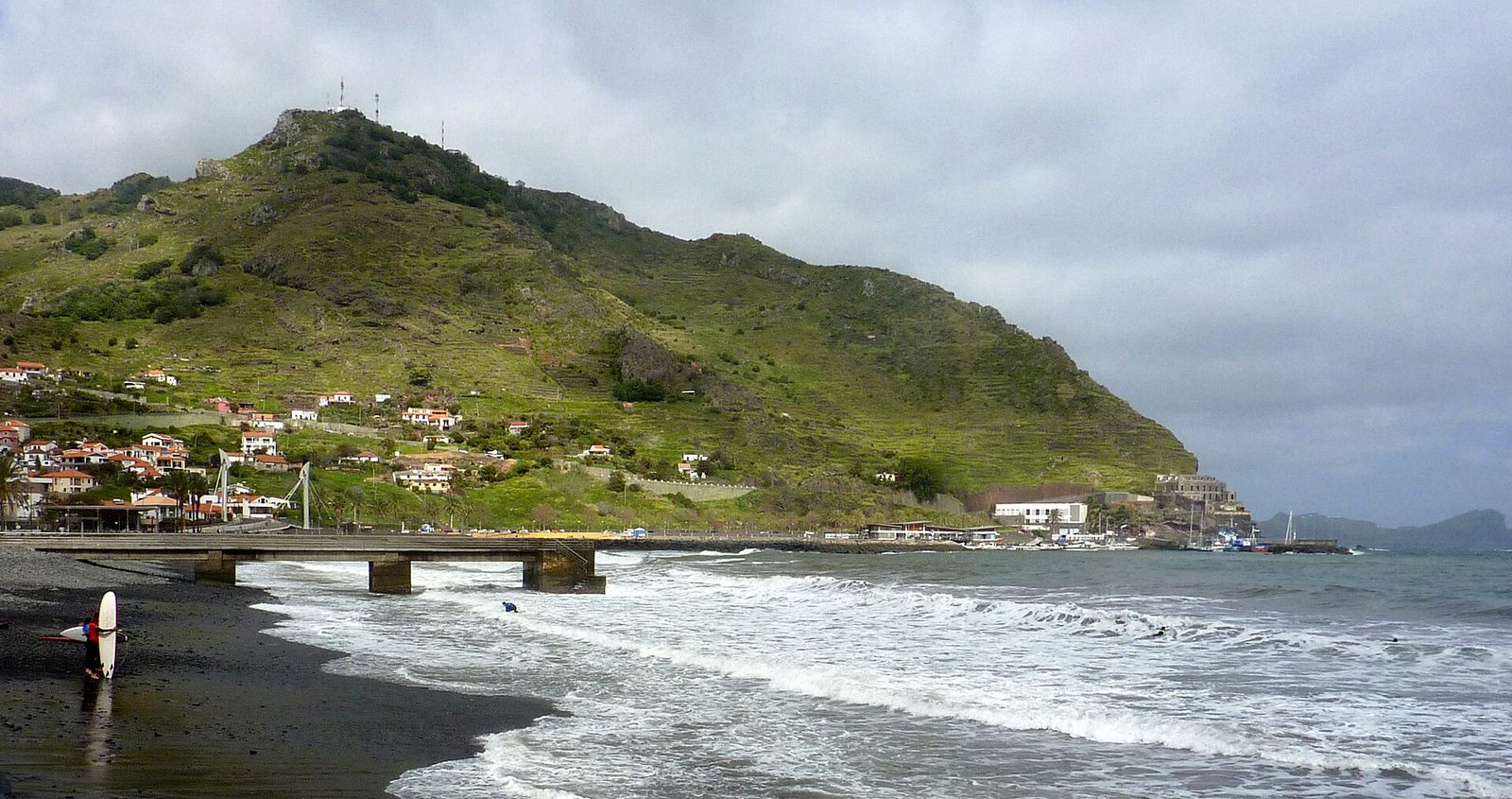
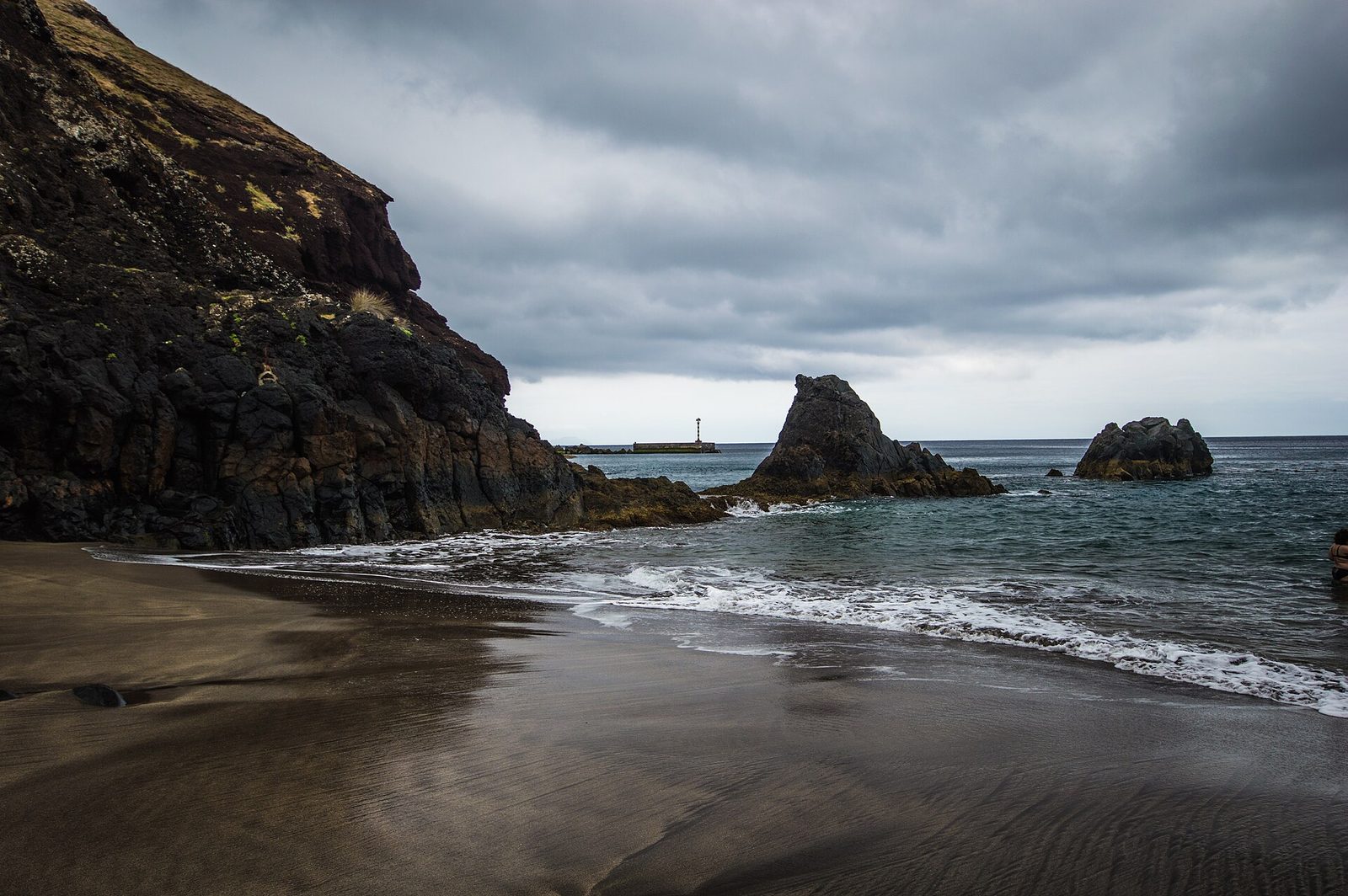
Prainha, in a cove east of Caniçal, is the one genuinely natural sand beach on Madeira, and the sand is dark grey-brown rather than black. It holds a Blue Flag and has lifeguard service listed — but for a shorter season than anywhere else flagged on the island, and the portaria classes it as a limited-use beach, which is its way of saying the cove is small and fills up.
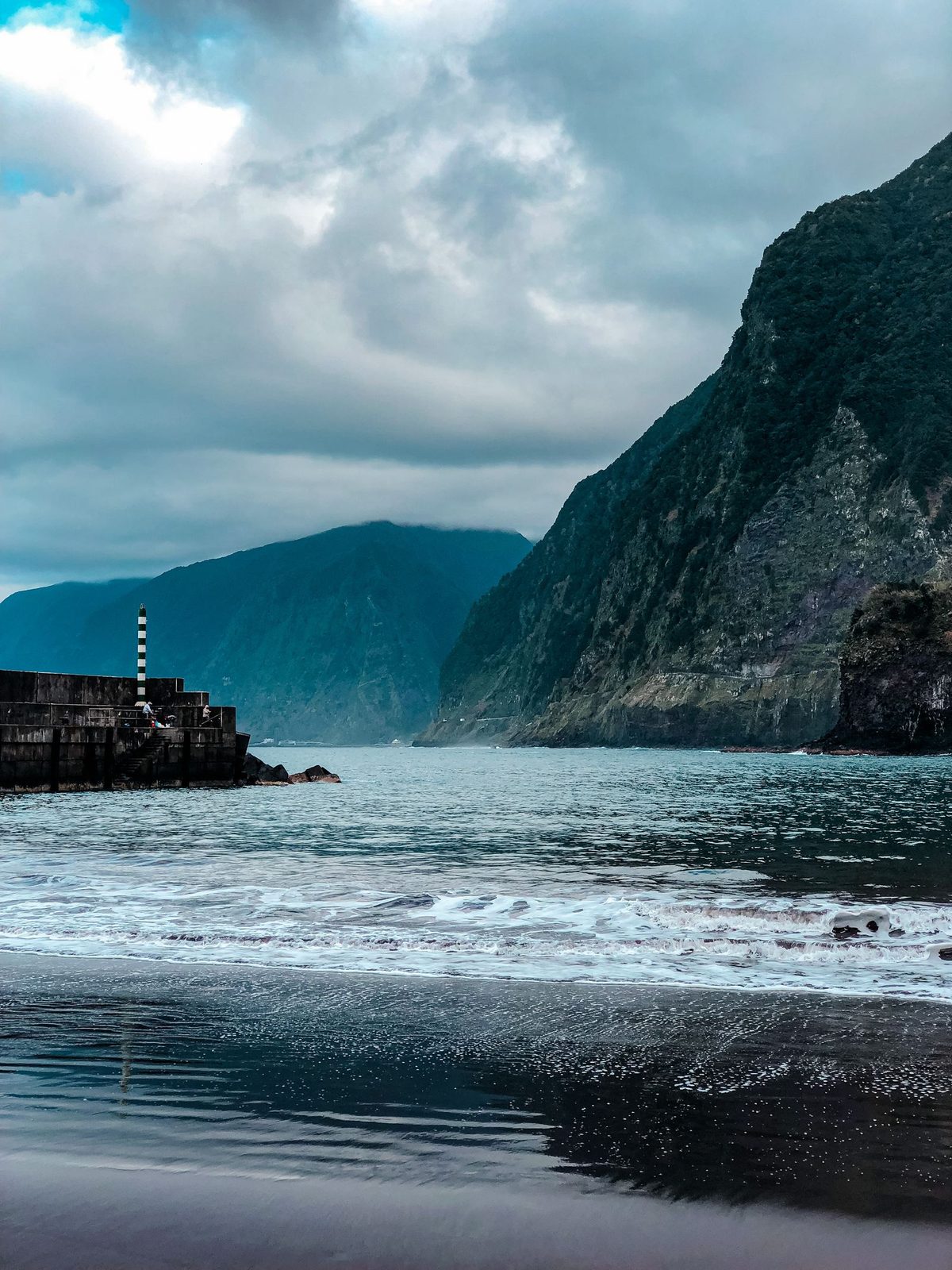
On the north coast, the Praia do Porto do Seixal is dark sand too, free, with lifeguard service listed for the season beginning in June. It is the answer to “where is the black-sand beach?” — and it is nowhere near the places usually given.
Funchal’s beach is cobbles
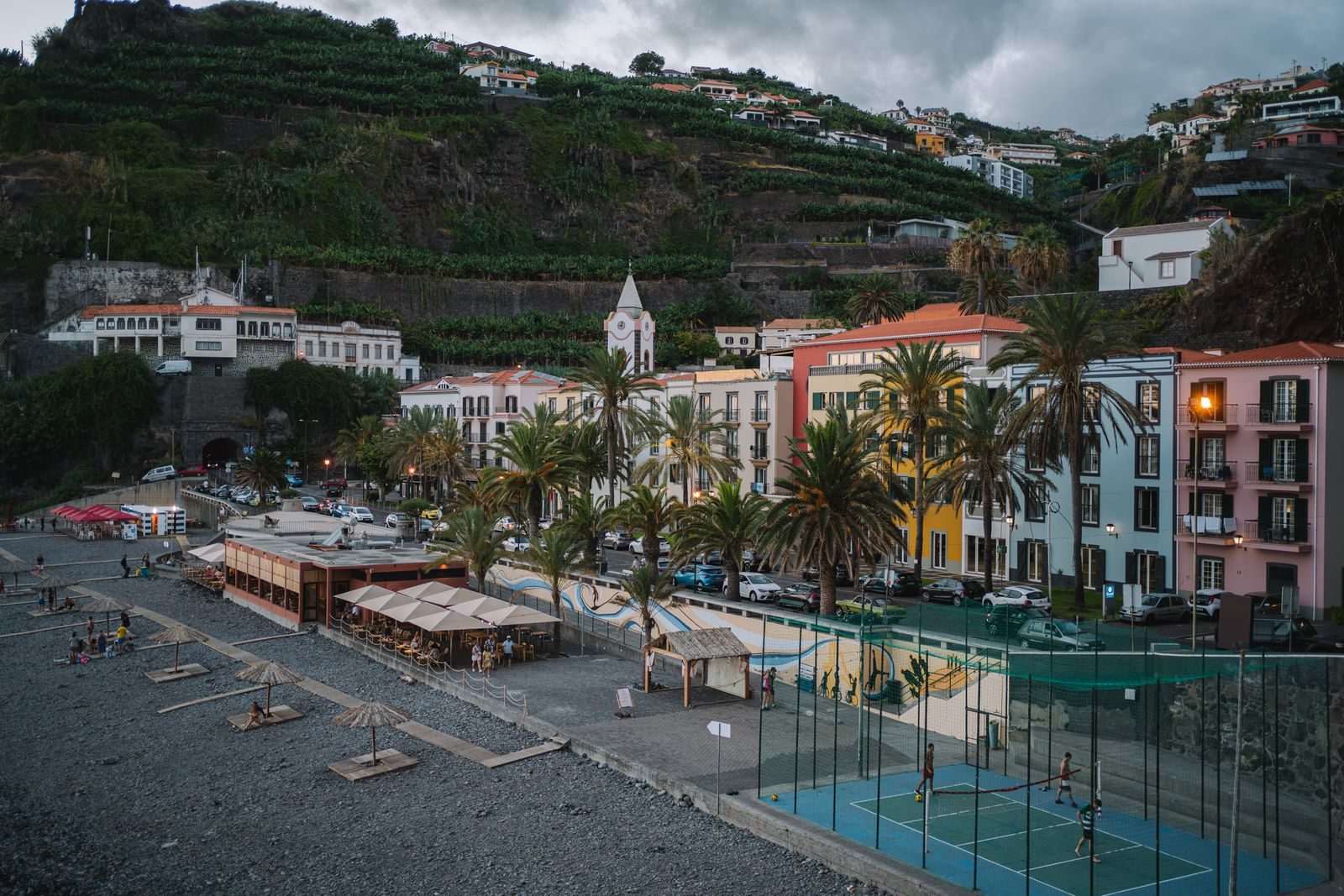
Praia Formosa runs about two kilometres west of the city and is the largest rolled-cobble beach on Madeira, with patches of black sand appearing at the water line in season. It holds a Blue Flag, lifeguard service is listed for its season beginning in June, and unlike Funchal’s bathing complexes it costs nothing.
That last part is the useful bit. The Lido, Ponta Gorda, Barreirinha and Doca do Cavacas are ticketed sea-water complexes, not beaches; Praia Formosa is the free alternative, with a car park and a bus.
Getting down to the water
Most of these are at the bottom of a cliff. Praia Formosa, Machico, Calheta, Ponta do Sol and Porto Moniz all have a car park and a bus stop within walking distance. Prainha has a car park and a long flight of steps. Jardim do Mar and Paul do Mar are reached by a road that switches back down the hillside.
Garajau is the exception: a cable car drops from the headland by the Cristo Rei statue to the pebble beach, 10:00–20:00 in summer and 10:00–18:00 in winter.
If you would rather leave the driving
Day trips to Porto Moniz and Seixal
Porto Moniz and Seixal are both on the north coast west of Funchal. Routes, stops and journey times vary, so compare the full itinerary before booking.
Fourteen Blue Flags, and what is missing
Madeira and Porto Santo together hold 17 Blue Flag coastal beaches for 2026. These are the ones on Madeira island.
- Porto Moniz
- Calheta
- Clube Naval do Funchal
- Ponta Gorda—Poças do Governador
- Formosa
- Lido—Complexo Balnear
- Barreirinha
- Palmeiras
- Reis Magos
- Ribeira do Natal
- Banda d’Além
- Prainha
- Ribeira do Faial
- Ribeira Brava
Read the gaps as well as the list. Seixal, Ponta do Sol, Garajau, Câmara de Lobos, Jardim do Mar and Paul do Mar hold none — and several of them are designated bathing waters with lifeguard service listed. A Blue Flag is applied for, by a municipality, every year. Not having one is not a failure.
See it before you go
Footage chosen for what it shows rather than how it is cut. The Praia Formosa walk in particular is uncommentated and full length, which is the honest way to find out what a cobble beach is like underfoot.
Filmed and published by Living Walks.
Filmed and published by National Geographic.
Filmed and published by 4k itinerantur.
Filmed and published by 4k itinerantur.
If you came for a sandy beach
Then you want the other island. Porto Santo has a single continuous golden beach along most of its south coast, and a ferry and a short flight go there daily. Nothing on Madeira is a substitute for it, and pretending otherwise is how visitors end up disappointed on a cobble bank.
What we could not verify
Named rather than quietly dropped, because you will meet all of these somewhere else.
- The Garajau cable car fare. The tourism board publishes hours but no price, and neither does the parish or the municipality.
- How much sand Machico actually received. Reports differ by three orders of magnitude and no official document was found.
- Month-by-month sea temperatures. The only first-party figure we found is Porto Moniz’s annual average; everything else traces back to commercial weather aggregators.
- Current admission to Funchal’s bathing complexes. The operator’s tariff page was still serving a 2022 table when we checked.
- Water quality at Jardim do Mar and Paul do Mar. Neither is a designated bathing water, so neither is sampled under that regime.
Where there is no beach at all
Boat trips along the south coast
A boat offers a different view of Madeira’s cliff-lined coast. Check the departure point, route and whether a swim stop is listed before booking.
Sources
files.diariodarepublica.pt
bandeiraazul.abaae.pt
www.portomoniz.pt
frentemarfunchal.pt
visitmadeira.com
wsrw.org